
What Faculty Affairs Leaders Actually Want From Technology
Faculty Affairs leaders don’t wake up looking for new software.
They wake up thinking about faculty appointments, promotion and tenure reviews, annual evaluations, committee workflows, and the countless administrative details required to keep those processes moving smoothly. The best technology isn’t the platform with the longest feature list—it’s the one that quietly reduces complexity, supports institutional policy, and creates a better experience for everyone involved.
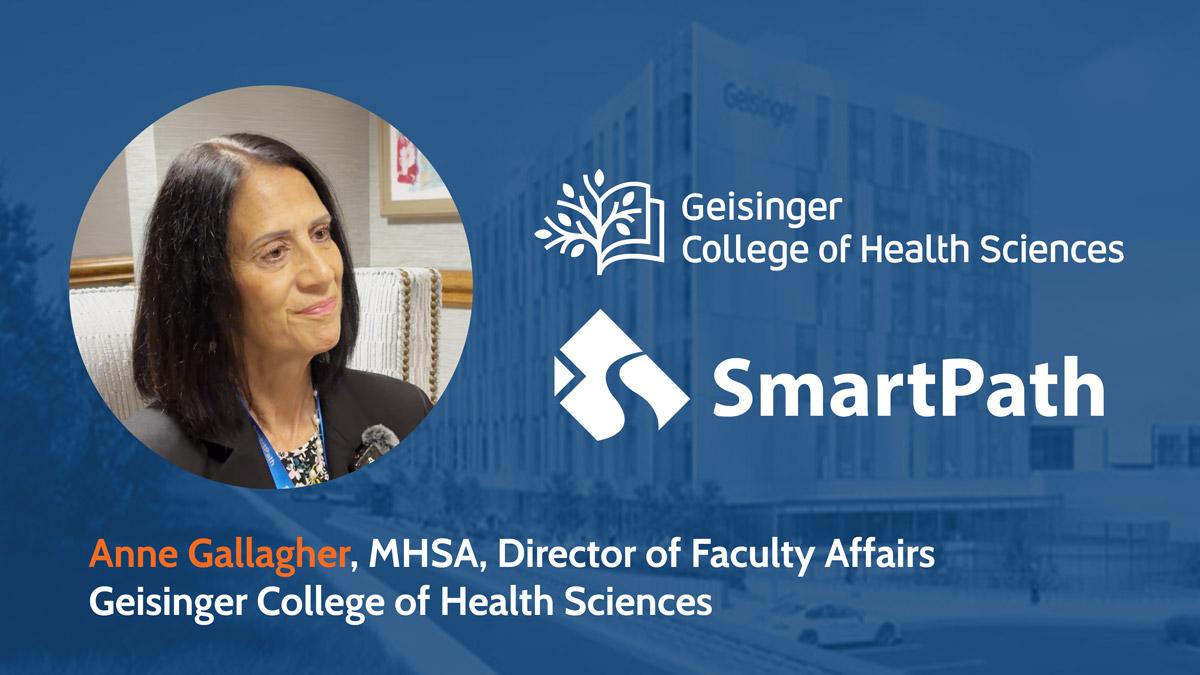
Watch Anne Gallagher’s Story
Before reading further, take two minutes to hear directly from Anne Gallagher as she shares how SmartPath improved faculty workflows, reduced administrative burden, and made the appointment and promotion process significantly easier for both faculty and administrators.
Watch the interview:
Anne’s experience reflects something we hear from Faculty Affairs leaders across higher education. They’re not searching for technology for technology’s sake—they’re looking for solutions that reduce confusion, improve consistency, and adapt to the unique governance and policies that make every institution different.
Her story isn’t simply about implementing new software. It’s about creating a smoother experience for faculty while giving administrators more time to focus on strategic work instead of manual coordination.
Great Technology Makes Complex Processes Feel Simple
Faculty appointments and promotions are among the most important—and administratively demanding—processes in higher education. Every action involves multiple stakeholders, institutional policies, supporting documentation, committee reviews, and approvals that must happen in the correct sequence.
For many institutions, coordinating those steps still depends on email, spreadsheets, shared drives, and manual follow-up. Over time, that administrative effort adds up, leaving Faculty Affairs teams spending more time managing logistics than supporting faculty or advising institutional leadership.
Anne Gallagher saw that dynamic change after implementing SmartPath.
“SmartPath has made our appointment and promotion process tremendously smoother.”
It is a simple statement, but it reflects something many Faculty Affairs leaders are striving for. The goal isn’t necessarily to make processes faster. It’s to make them clearer, more consistent, and easier for everyone to navigate.
Better Workflows Create Better Faculty Experiences
Technology often promises operational efficiency, but Anne points to another outcome that may be even more important: a better experience for faculty.
Guided Workflows Replace Guesswork
Before implementing SmartPath, faculty members relied heavily on email exchanges to complete appointments and promotions. Documents arrived separately, questions came in one at a time, and administrative staff often found themselves piecing together submissions while responding to countless follow-up messages.
Rather than expecting faculty to remember every requirement, SmartPath guides them through the process one step at a time. Each stage builds on the previous one, making it clear what remains to be completed before a submission is finalized.
As Anne explains:
“It’s been a smoother operation, and they understand that because it’s a step-by-step process. They’re not done until they do something to submit everything, which has worked wonderfully.”
Guided workflows benefit everyone involved. Faculty members know exactly what is expected of them and where they are in the process, while administrators spend less time answering routine questions or tracking incomplete submissions. The result is greater consistency, fewer delays, and a significantly better experience for everyone.
Small Workflow Improvements Can Have a Big Impact
Some of the most meaningful improvements aren’t dramatic—they simply eliminate everyday friction.
Anne highlighted one example that demonstrates how thoughtful workflow design can strengthen institutional processes while reducing administrative effort.
Turning Routine Tasks Into Reliable Processes
Before SmartPath, appointment letters were emailed to faculty with no reliable way to document acceptance. Administrators often waited for replies that never came or spent additional time following up to confirm that important information had been received.
Today, acceptance is built directly into the workflow.
Faculty members formally acknowledge their appointment while confirming they’ve received important institutional documents, including the faculty handbook, faculty bylaws, and institutional regulations. What was once a manual administrative task is now a consistent, documented part of the appointment process.
Instead of relying on memory or email follow-up, the workflow itself ensures that every important step is completed.
Key Takeaway
The best Faculty Affairs technology doesn’t replace institutional processes—it strengthens them by making them easier, clearer, and more consistent for everyone involved.
Higher Education Expertise Matters
Technology alone doesn’t solve operational challenges.
Successful implementation requires understanding the unique environment in which Faculty Affairs operates. Governance structures, committee reviews, appointment pathways, accreditation requirements, faculty policies, and institutional culture all shape how work gets done. Generic workflow platforms often struggle with these nuances because they weren’t built specifically for higher education.
Every Institution Is Different—and That’s the Point
Anne credits Mountain Pass not only for responsiveness, but for bringing deep higher education experience to the table.
Rather than beginning every conversation from scratch, the team understood the common challenges facing Faculty Affairs offices while taking the time to understand what made her institution unique.
As she explains:
“When I ask for something, the nice thing is they’ve worked on it before. They’ve done it. So they understand there’s a base knowledge of what’s needed and then they take the time to learn how our institution might be a little bit different from other institutions.”
That combination of experience and flexibility is critical. The best technology partners don’t expect institutions to fit a standard template. They bring proven expertise while recognizing that every campus has its own governance model, priorities, and ways of working.
Trust Is Built Through Responsiveness
Selecting a technology platform is the beginning of a partnership, not the end of one.
Faculty Affairs is constantly evolving. Policies change, new workflows emerge, and institutional priorities shift over time. Technology partners need to evolve alongside the institutions they support.
Anne believes responsiveness has been one of the defining characteristics of her experience with Mountain Pass. Having previously implemented electronic medical records in clinical settings, she understands what successful technology adoption looks like and recognizes the value of working with a team that listens, responds quickly, and continuously improves the solution.
That level of support builds confidence—not just in the software, but in the partnership behind it.
Start Small. Scale Thoughtfully.
One of the biggest misconceptions about workflow modernization is that institutions must transform everything at once.
In reality, the most successful implementations often begin with a single high-impact process. Whether it’s appointments, promotions, annual reviews, or credentialing, one successful workflow creates momentum for the next.
Faculty quickly become comfortable with guided experiences. Administrators reclaim valuable time by reducing manual coordination. Leadership gains better visibility into institutional processes. Over time, those individual improvements create a stronger operational foundation that supports Faculty Affairs across the institution.
Modernization doesn’t require starting over.
It requires starting intentionally.
What Faculty Affairs Leaders Actually Want From Technology
Anne Gallagher’s experience reflects something we hear consistently from Faculty Affairs leaders across higher education.
They aren’t looking for software with the longest list of features. They’re looking for systems that reduce confusion instead of creating it. They want guided experiences that make life easier for faculty, while giving administrators the tools they need to manage complex processes with greater confidence. They value technology partners who understand higher education and recognize that every institution has unique governance structures and operational requirements.
Ultimately, the best technology fades into the background.
When workflows are intuitive, communication becomes clearer, and institutional policies are supported rather than constrained, Faculty Affairs professionals can focus on what matters most: supporting faculty, strengthening academic operations, and advancing the mission of their institution.
That is what Faculty Affairs leaders actually want from technology.
Build Technology Around Higher Education—Not the Other Way Around
Every institution is different. Your technology should recognize that.
SmartPath combines configurable workflows, faculty lifecycle management, and decades of higher education expertise to help colleges and universities modernize Faculty Affairs while preserving the policies and governance that make each institution unique.
Because the best technology doesn’t ask institutions to change how they work.
It helps them work even better.